
What are you willing to go through for greatness? How hard are you willing to push yourself? Would you dedicate your entire life to the pursuit of your art? Masutatsu Ōyama did just that.
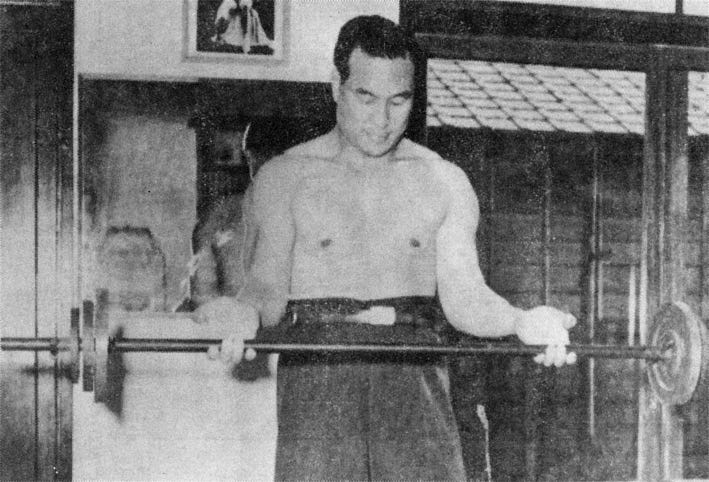
Mas Oyama was the legendary founder of Kyokushin Karate, a brutal, physical, full-contact form of the striking art. Born in Korea in 1923, then a part of the Japanese Empire, as a young boy he was a weakling. His older brother, Lee, taught him boxing in an attempt to toughen him up. Yet, he made little progress. He immigrated to Japan at the age of 15 to attend the Imperial Japanese Army’s Yamanashi Aviation School, with the dream of becoming a pilot.
At the age of 16, he was kicked out of aviation school for circumstances beyond his control. Wandering around Tokyo as an unwanted Korean foreigner, he vowed to make something of himself. Oyama writes in his 1958 work, What is Karate?:
“Suddenly I had to find means of support and a place to live. I walked about looking for a boarding house. What was the result? I soon realized that I was an unwanted Korean. Nobody would rent me a room. At door after door of several boarding houses, they turned me away. As I walked dejectedly on the streets in the evening, I felt very sad and completely foreign. I called my mother’s name aloud and turned toward the ruddy western sky. ‘Mother, how you would grieve if you knew that your sixteen-year-old son was wandering about like a stray dog in the vast city of Tokyo with no place to live.’ This was the little prayer I uttered as, overcome with homesickness, I yearned for the comforting arms of my mother. Yet, I could not go back home. I had come over to Japan for a purpose. I could not become a pilot but felt that there must be some other way to succeed. ‘I will find success in some field of study,’ I told myself. I made a firm resolution to prove my worth and swore to withstand the cold rejection I met as a foreigner.”
He soon found a boarding house that would take him and enrolled in a university where he took up boxing and judo, where, as he says:
“One day when I was watching Karate training by some students of the Karate class, I was much moved by it. I felt it very mystic in technique and spirit, unlike boxing and judo.”
He soon became a student of Gichin Funakoshi’s son, Gigō Funakoshi, where he began his foray into the world of Karate. Of his early training, he says:
“Once I had become a pupil of Master Funakoshi, I kept up strenuous training day and night. The isolation and solitude which I experienced as a foreigner might have made me more devoted in training. As a result of strenuous training for two years, I gained enough strength to break piled roofing tiles of over ten pieces at one stroke of my fist, while making equal progress in technique.”
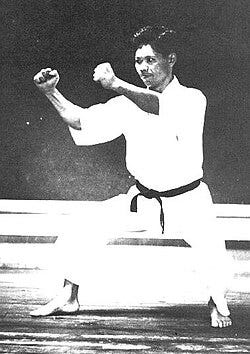
During the chaotic years following World War II, Oyama found himself at odds with the world, frequently engaging in street brawls with U.S. Military Police and in failed political affairs with a group attempting to form a united Korea. He became disillusioned. His friend, Neichu So, advised him to escape into nature.
Oyama said of this time:
“I accomplished nothing; depressed, I worried day and night. I was an inexperienced young man with the hot blood of patriotism and a righteous disposition. ‘We, young men, must not let ourselves become slaves to mammon, flatterers of power, and slaves of force.’ I was determined to challenge these corrupt leaders. However, just being righteous was not enough to overcome clever politicians. Contrary to my expectation, the staff made reverse use of me, and duped by them, I was harried by the police who had been incited to pursue me because of my political thinking. When I was driven almost to self-ruin, Mr. So Nei-Chu, an elder of my native province, rescued me from the crisis. Mr. So, a thinker and master of Karate, was a rare man of character and confidence. Moreover, he was a devotee of the Nichiren Sect. He preached to me that martial arts and religion are inseparably united and taught me the scripture of his sect. When I was at my wit’s end as to what to do and went to see him, Mr. So, after encouraging me, said, ‘You had better withdraw from the world. Seek solace in nature. Retreat to some lone mountain hideout to train your mind and body. In three years you will gain something immeasurable. As the proverb goes, “Temper the heated iron before it gets cold,” so train yourself in self-discipline before you grow older if you wish to be a great man.’ When I heard Mr. So’s advice, I felt as if I had been awakened and I suddenly understood the path to take. The Oriental Confucian maxim is: ‘First train one’s self, manage a household, and then reign over a country.’ It is essential to train one’s self if one wants to administer the affairs of state well. To Mr. So, I shall forever be grateful for his advice and instruction which made me what I am as a Karate master. I made up my mind to concentrate on the difficult road ahead. I reviewed all the futile actions I had taken in the past and decided, as advised by Mr. So, to isolate myself at Mt. Kiyozumi in Chiba Prefecture. Mt. Kiyozumi is beautifully situated, commanding the rough seas of the Pacific Ocean. This is where Nichiren Shonin, Saint of the Nichiren Sect, became a disciple of Dozen Osho when he was twelve years old. At dawn of April 28, 1253, after twenty years of hard and severe training, Nichiren Shonin declared the birth of a new sect, Hokke-Shu, at Asahi-no-Mori on the summit of this mountain. Mt. Kiyozumi was therefore an excellent spiritual place for training in martial arts.”
Before we continue with the story, I want to give a brief description of Nichiren Buddhism:
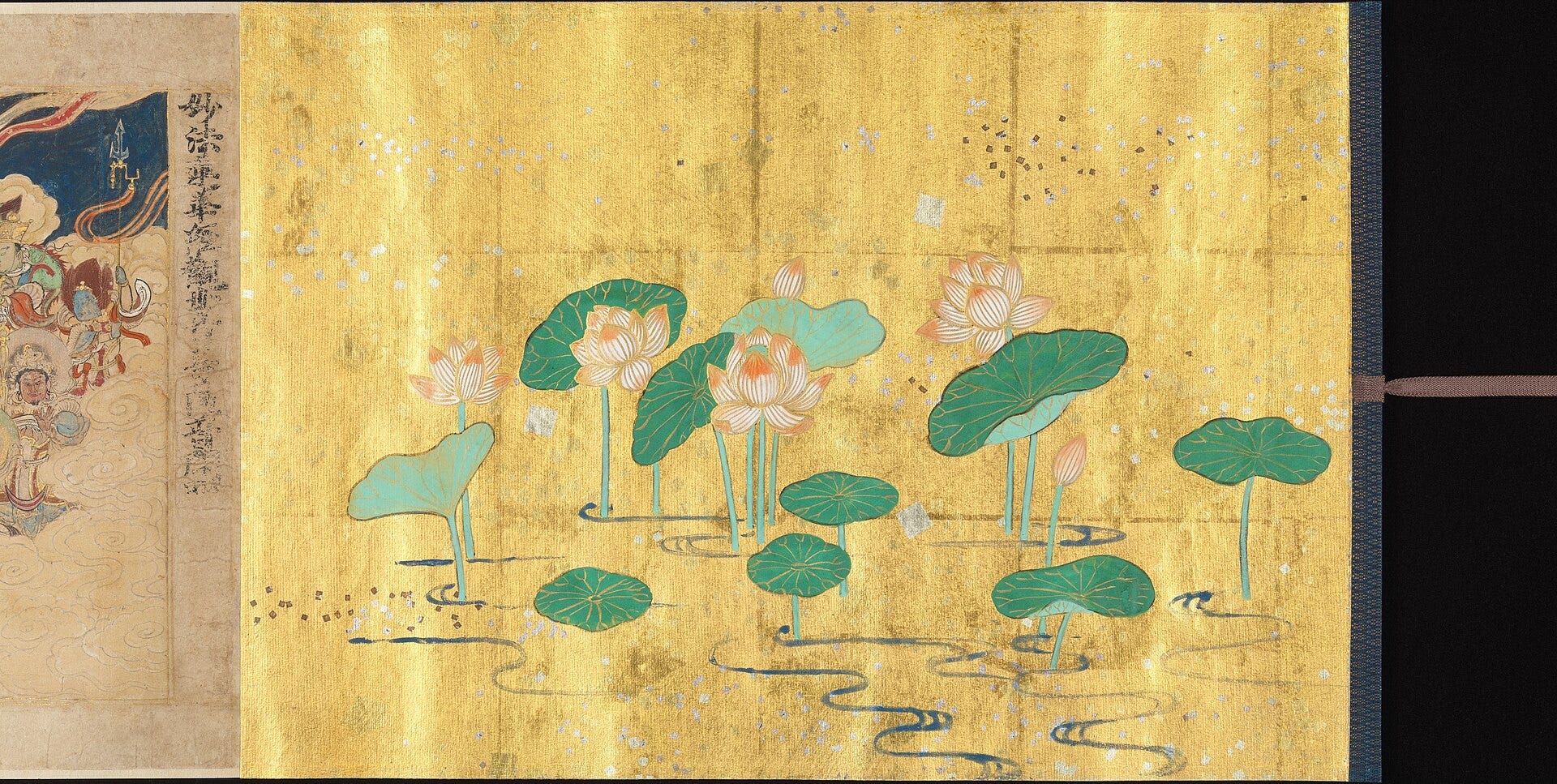
Founded in 13th-century Japan by the priest Nichiren, this school of Mahayana Buddhism is distinguished by its exclusive focus on the Lotus Sutra as the ultimate and only necessary teaching for attaining enlightenment. Nichiren taught that the essence of the sutra is contained within its title, and he established the practice of chanting the mantra Nam Myoho Renge Kyo (Devotion to the Mystic Law of the Lotus Sutra) as the primary means to transform one’s life and the world. Unlike other sects that emphasize silent meditation or complex rituals, Nichiren Buddhism is known for its energetic, vocal practice and its historically confrontational stance against other Buddhist schools, which Nichiren believed had led Japan into spiritual decay. Central to the practice is the Gohonzon, a calligraphic scroll that serves as a focal point for chanting, representing the enlightened life-state inherent in all people.
Now, back to the mountains:
Mas found a patron to financially support him during his training and ascended to Mount Kiyozumi, where he planned to train for three years with one of his pupils, Yashiro.
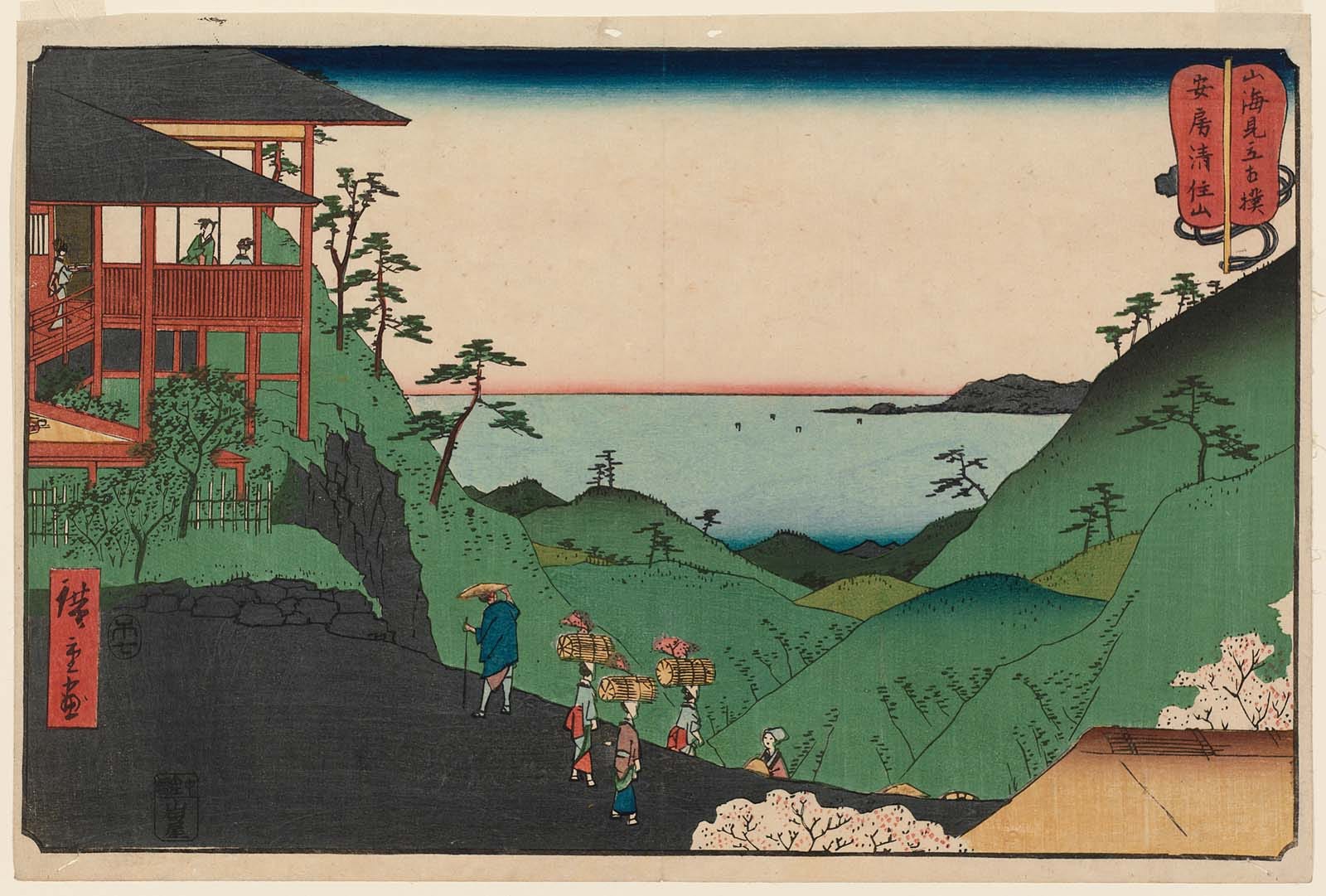
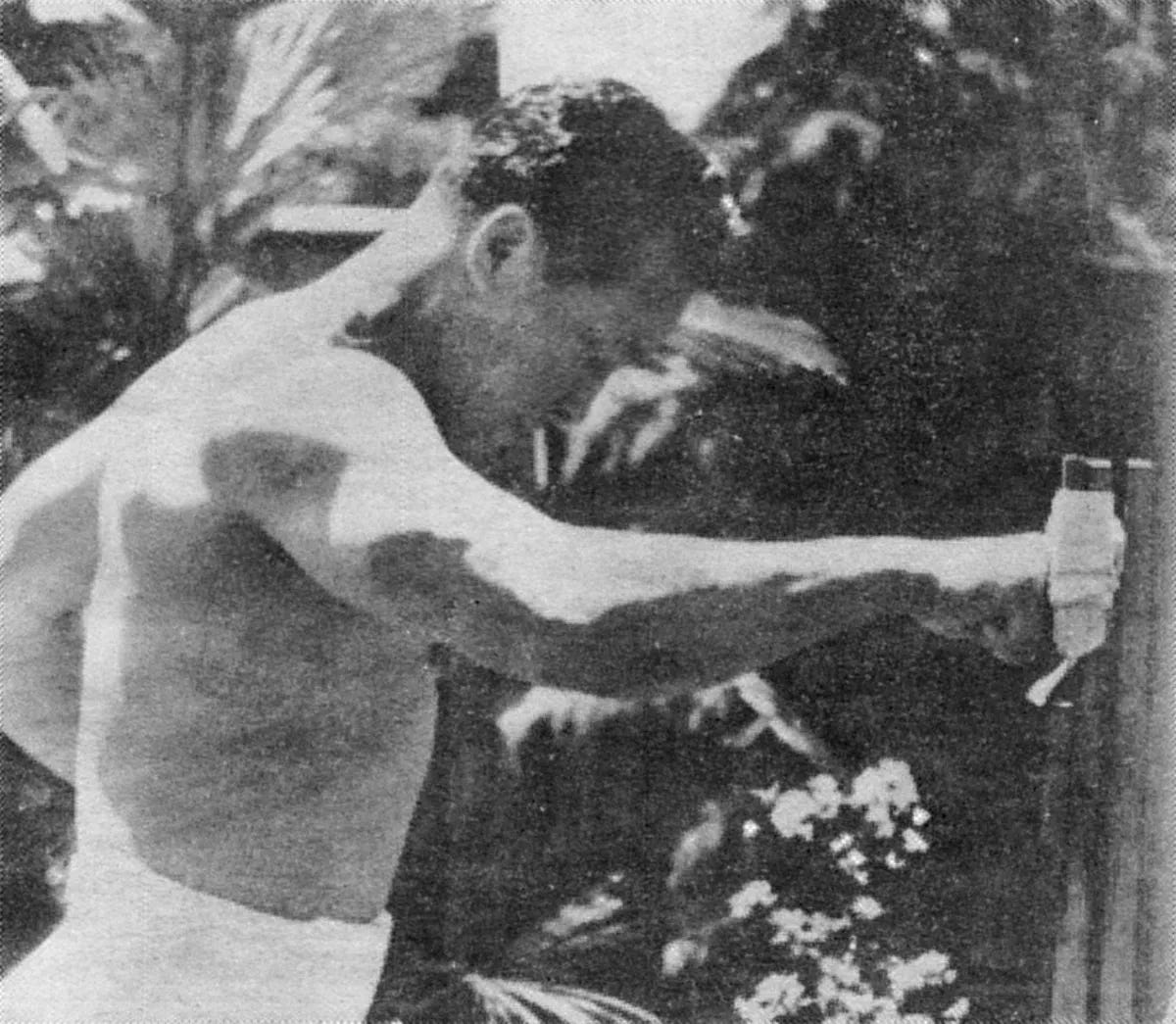
His training tested the limits of human endurance: using stones and trees as training implements, running up steep mountain slopes, throwing thousands of punches and kicks, and meditating under icy waterfalls. He describes it as follows:
“I started living with one of my pupils named Yashiro in a shack which I had erected halfway up the mountain. There was no electricity, no fuel gas, no water service; there was, of course, no radio to listen to nor newspaper to read. Our first few days were spent in hard training without much resentment due to the novelty of new surroundings. As the days passed, we, who had been accustomed to a cultural life, came to feel the inconvenience beyond description. It was not a matter of inconvenience alone, but a profound mental strain caused by the solitude of the deep mountain vastness. It is said that the first week in jail is the period one is attacked by a feeling of uneasiness and horror. For us, during the first one or two months the wind sounded as Satan’s footsteps; we had nightmares and were awakened many times. Every night we felt solitude and horror as if we were left behind at the end of the earth or in some abyss of hell. We endured it, though, in this isolated heart of the mountain. We rose at five in the morning, trained ourselves by running up and down the steep hill, practiced punches two thousand times against the stumps of trees around us, and broke sprigs down with knife-hand strikes, looking upon them as opponents. We continued our bloody training every day. Moreover, to cultivate strength of arms we practiced the pinch press several hundred times daily with a barrel made of stone weighing 130 pounds; we pounded on sandbags thousands of times; and we practiced sparring. These were our daily lessons, and through these hard lessons we overcame solitude and irritation. I bore all this, but my pupil could not. One night he finally ran away from the mountain solitude in secret, and I was left alone. There was one thing in the mountain life which consoled us. That was a once-a-month visit from a friend, Mr. Kayama, from the town of Tateyama. He brought food for the whole month at one time, and not more than once a month, probably because he did not want to disturb us in training. These visits of Mr. Kayama were a ‘meeting Buddha in hell’ for me, especially so after my pupil left the mountain. I often felt as if I waited thousands of days between visits. I warned myself not to anticipate the visits. My training became more intensive, and yet solitude distressed me. I must say that the emptiness of solitude is much more painful than the hardship of training. I habitually became lost in thought watching the poor light of the shack. Even the scripture of Hokkekyo which I chanted every night could not soothe my irritated mind; even Zazen (sitting in meditation) could not make me reach a state of serenity of mind. The lonely solitude was deeper than that which we feel when betrayed by our lovers. ‘In this civilized age, why should I train myself in such a primitive way as this? Training could be done in town if I would.’ My mind was moved; I began to have doubts about my plan. But to whom should I appeal?”
He wrote a letter to his good friend, Neichu So, who advised him:
“What others have done should not be impossible to you. Was there any master of martial arts who had not experienced mortification? The really great man can only be produced through continuous heavy training. You should be more courageous in striving toward your goal. That is the most important thing.”
With this, Mas was inspired. He vowed to become the strongest Karate fighter in all of Japan.
Mas had heard a story that a master of Karate had killed a bull with one stroke of his fist. He shaved his head, vowing to learn the technique before his hair grew back. He then shaved off one eyebrow in an attempt to force himself to stay on the mountain.
He wrote:
“Though I kept on my intensive training, I lacked the asceticism of a saint; sometimes I thought of the atmosphere of town and women and was annoyed by the worldly passions of a mortal; often I was agonized by evil and mundane thoughts. On these occasions I recalled the words of Mr. So; I sat in meditation, recited Okyo (a Buddhist scripture), and sat in deep thought. Besides this training, I kept on hand a copy of a novel entitled Miyamoto Musashi written by Mr. Eiji Yoshikawa about the life of a famous thinker, swordsman, and read it as a constant guide to retain my courage and determination. I tilled the soil at the rear of my shack where I grew vegetables for self-support. Squirrels and foxes came up here to look for food, but I could not turn them away, for my lonesome mind thought tenderly of animals. Meanwhile, as a result of my constant intensive training, I became a man of strong build and gained great confidence in myself. Some children from the village came peeping into my shack; probably they had heard of me from a woodcutter whom I sometimes met in the mountain. The woodcutter must have told them that he met a ‘Tengu’ (Japanese long-nosed goblin) in the mountain. This rumor was right to some extent, because after my mountain life of more than one year, my unkempt hair was hanging down to the shoulders, I had grown a long mustache, and my loneliness had given my eyes a mysterious glitter. I had planned to stay in the mountain for three years, but when one year and a half had passed, I had to come down from the mountain due to an inescapable reason. My patron, Mr. Ozawa, had resigned from political circles, affecting my problem of living. As I travelled down the mountain, I thought that life in the mountain had indeed been hard beyond description, but that it was much more endurable than the corruption of the political organization I had been affiliated with. I felt refreshed and reborn, the result of my intensive training of over one and a half years in the mountain.”
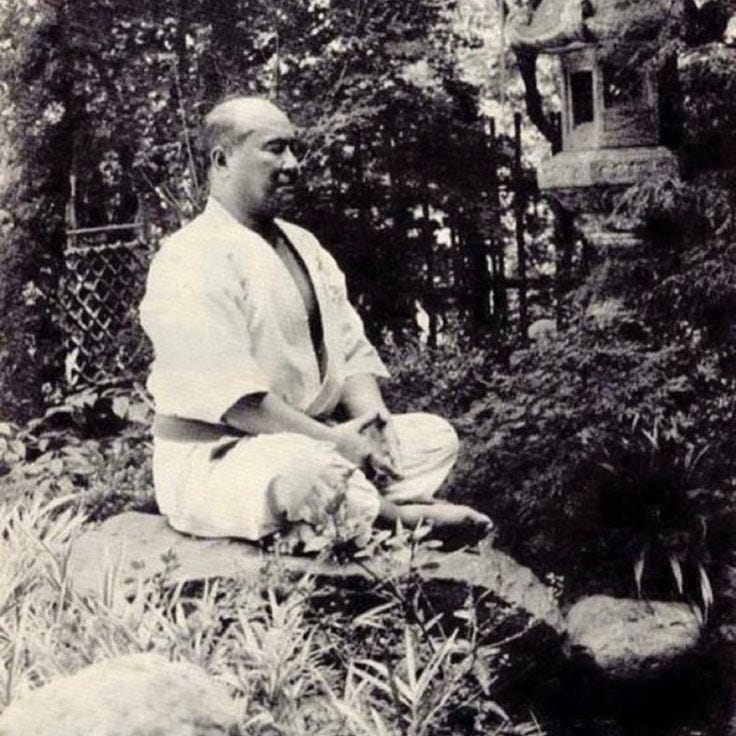
After his training in the mountain had finished, Mas felt strong and full of vigor. He won the 1947 All-Japan Karate Championship with ease, but still felt called to master the feat he had trained for on the mountain: the killing of a bull with a single blow.
Mas relates:
“Although I was acclaimed the number one Karate-ka in Japan, my earlier desire to repeat the ancient master’s feat of striking down a bull with one blow of the fist still remained. One day I went to a slaughterhouse in the suburbs of Tokyo and asked them, ‘I am a man training in Karate. Lend me one of your bulls, as I would like to strike it to death to test the power of my fist.’ ‘What? Kill a bull with your bare hand? You must be crazy.’ They would not take me seriously, and it was natural for them to do so. It is very hard even for a skillful butcher to kill a bull with a heavy sledgehammer, and I wanted to kill one with my bare hand. I, however, would not give up. After asking them again and again, I finally succeeded in getting a bull. The bull appeared to weigh about 1,000 pounds. First, I posed the right Seiken and, with a yell, gave one stroke on its brow. Though my stroke took effect, the bull, bleeding from the nostril and mouth, began to run amuck instead of falling down. I was unable to approach it for another stroke. With remorse, I left the slaughterhouse, still with expectation of success someday. Later, I heard that the bull’s brow-bone had been cracked.”
In 1952, Mas travelled the United States giving Karate demonstrations and winning prize tournaments, returning to Japan a popular and well-known figure in Karate.
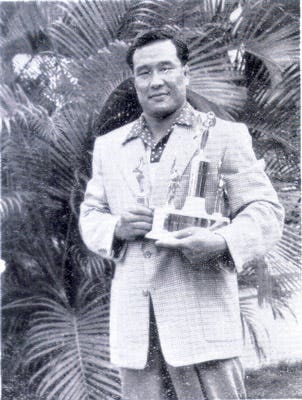
Still, the determination to strike down a bull remained. Mas writes:
“I returned to Japan widely known and popular, for the Japanese newspapers and magazines had reported on my exhibitions in America. One thing still remained — a fight with a bull. I continued to dwell upon this contest between man and beast. I would pin the bull and break its horns off with my Shuto. If I succeeded, I would establish a kind of worldwide superhuman record, and could also contribute to the publicity and spreading of Karate. With this resolution, I began to make daily visits to the slaughterhouse. I started off first by breaking the horns of smaller bulls, later graduating to bigger ones. In the meantime, one of my friends, a movie director, told me that he would like to produce a film under the title of Karate Versus Fierce Bull. I was all the more encouraged by this proposal. I studied bulls, experimenting on more than fifty head of cattle as to how to dodge a fierce, onrushing bull. I also made close observations on the habits and weaknesses of the bulls. As a result of the study and observation, I found that in order to evade a bull, it was necessary for me to run one hundred meters in thirteen to fifteen seconds, and reduce my weight to approximately 180 pounds. I practiced running along the bank of a river abreast with a bull to find out its power of endurance. As my daily training, I got up at 4 a.m., ran eight kilometers to and from the Hachiman Shrine, practiced Karate two hours in the morning and three and a half hours in the afternoon.”
Mas was transforming his body into a bull-fighting machine.
In 1953, the preparations were in place. A film crew had purchased a bull, and Mas’s day to prove himself had arrived. He could not back down.
He writes:
“On the day of the filming, upon looking at the bull the movie company had brought, I was frightened. It was a large bull weighing about 1,250 pounds with a horn 10 inches long and 3 inches round at the base. To tell the truth, I was quite uneasy, but since I could not very well withdraw, I resolved to proceed. Newspapermen, magazine reporters, together with the filming group caused quite a stir in the quiet fishing hamlet. Topics among the spectators were, ‘Can he really break the horn with his bare hand? I can’t believe it. Isn’t he light-headed?’ They were in doubt as to the outcome of this event. One newspaper of the day said, ‘A duel in the twentieth century! Will bull win 6 to 4?’ Unfortunately, the duel was postponed because of a light rain. ‘Well, you are lucky, sir; your life was extended for one day,’ joked a newspaperman. I was, however, far from a joking mood, and held a telegram sent from my only daughter which read, ‘Good luck, Daddy!’”
The day had finally arrived for Mas Oyama to prove his worth.
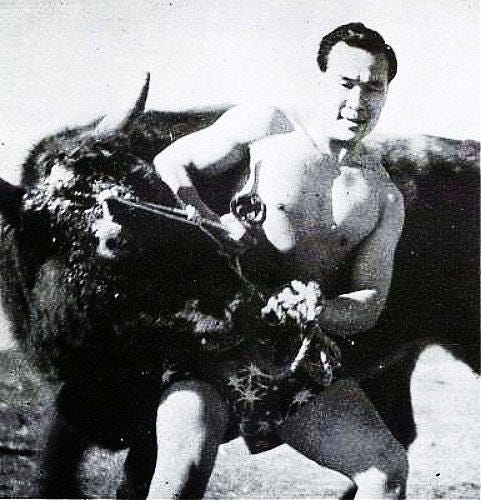
I’ll let Mas take the story from here:
“There were thousands of spectators. I put on short pants tightened with a wide leather band and, of course, as a Karate-ka used no protection for my fist. Spectators raised a big cry of excitement. ‘Don’t lose this one!’ they shouted. Standing by the seashore, I raised my hands high and closed my eyes to take a posture free from all thoughts. When I opened my eyes, the thousands of people, the four movie projectors equipped with telescopes, fear of the bull—all these things had vanished from my consciousness. Now the huge black bull was released from a rope. Neck lowered, shaking its sharp horns, it rushed at me. I swiftly dodged its attack right and left, and finally grasped it by the horns. I tried to twist it down to the ground, but the 1,250-pound bull, spreading its legs, refused to budge. Instead, the press of the bull forced my feet to stick in the sand. At last my hands slipped off the horns because of perspiration and the enraged bull rushed at me with terrible force. Before the filming of the event, I had been asked by the movie director to battle for about ten minutes, but I had no reserve to do so. If worse comes to worst, I will be thrust to death. We kept up the bloody struggle. Suddenly I missed my footing and fell on my back. I felt my position to be precarious, but it was too late to raise myself up, and the bull, with a low snort, made a thrust at me. Though I recovered quickly, my skin was torn from abdomen to breast. The blood flowed, but I felt no pain. Instantly grabbing the horns with my hands, I twisted its neck right and left with all my might. Somebody cried, ‘Let him stop, or he will be killed!’ A messenger from the filming group came up and asked me, ‘Will you take a rest? It’s dangerous if you keep fighting this way.’ ‘I’m all right,’ I replied, ‘and I’ll never yield to the bull with only a wound like this. I must win at all costs, so please continue with the filming.’ No unguarded moment was allowed during discussion. The bull, shaking its horns right and left, tried to slip off my hand. Gradually, however, I felt my opponent becoming tired. The moment I noticed this, I twisted the bull strongly to the left with all my might, taking advantage of its strength. When it toppled down into the sand, making a heavy thud, I jumped in quickly to grip the horns firmly with my hands. Its large abdomen was beating thunderously, and both the bull and I were covered with perspiration and sand. While my opponent tried to get up, I pressed down, trying to keep it from doing so. I concentrated on my right Shuto, saying, ‘Either I break the horn or my hand will be broken!’ With a yell, I struck at the base of the horn. The bull groaned; its horn, broken at the root, was hanging down from its forehead. I pulled the horn out of the forehead and unconsciously held it up high over my head. Suddenly the stir of the spectators like a distant thunder reached my ears. I had conquered the bull. At last I could realize my long-cherished desire. I was moved to tears. The death struggle with the bull had lasted for thirty-five minutes; I felt it neither long nor short; I simply fought with all my might, and I had succeeded in my record-breaking feat after indescribably hard training and a life-and-death adventure.”
Mas had conquered the bull. Throughout the rest of his life, Mas continued to train in and promote Karate, pulling off incredible feats, such as defeating 100 men in a row in a 100-man kumite.
Of Karate, he said:
“I have tested the limit of possibility for human strength using Karate. As a result of it, I have found out that I can easily break thirty piled roof tiles, two red bricks, or a two-inch-thick square board with one stroke. I can also break a stone weighing over twenty pounds. I have verified that the strength to do these, which is called ‘superhuman,’ is developed by repeated training. And needless to say, it is mental power, surpassing physical strength, which is required for this severe training. I once had an ambition to become a good politician and, after experiencing much doubt and suffering, realized the necessity for power over self. Today, as a man who studies and trains in the martial art of Karate, I feel keenly that a perfect man can be produced only through a combination of culture and physical training. The affairs of state can only be well administered by the hands of a man self-disciplined mentally and physically. Miyamoto Musashi, a famous swordsman of olden times, once said, ‘Make yourself familiar with all sorts of martial arts; do not think of greediness, profit, or life in tomorrow. Think of nothing but the victory or defeat of today.’”
Mas died in 1994 at the age of 70, after having lived the life of a warrior.
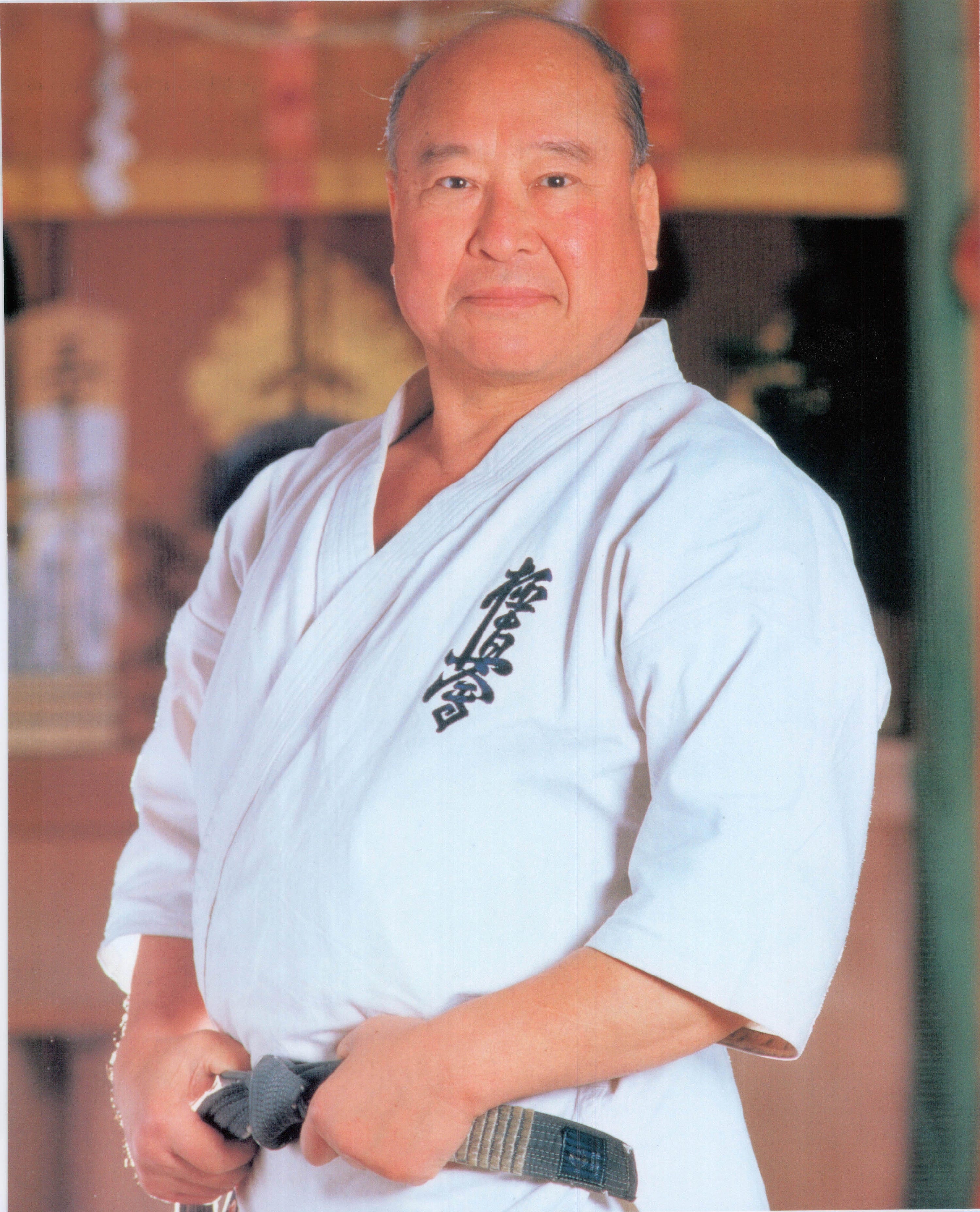
He was an inspiration to generations of Japanese martial artists and was even the inspiration for the character Ryu from Street Fighter, as well as a manga and anime series about his exploits, Karate Baka Ichidai.
He even inspired a Pokémon, Sawk.
Mas’s life and training show that, with discipline, asceticism, and a single-minded will, we are all capable of grabbing the bull by the horns, and even… chopping them off.
I’m Barbarian Herodotus; follow for more masculine virtue.
If you are interested in reading the work that inspired Mas’s mountain training, I’ve included a link to Eiji Yoshikawa’s epic, Musashi, below.
The novel is incredible and is based on the lives and exploits of another legendary martial artist, Miyamoto Musashi, who I have covered in other articles.
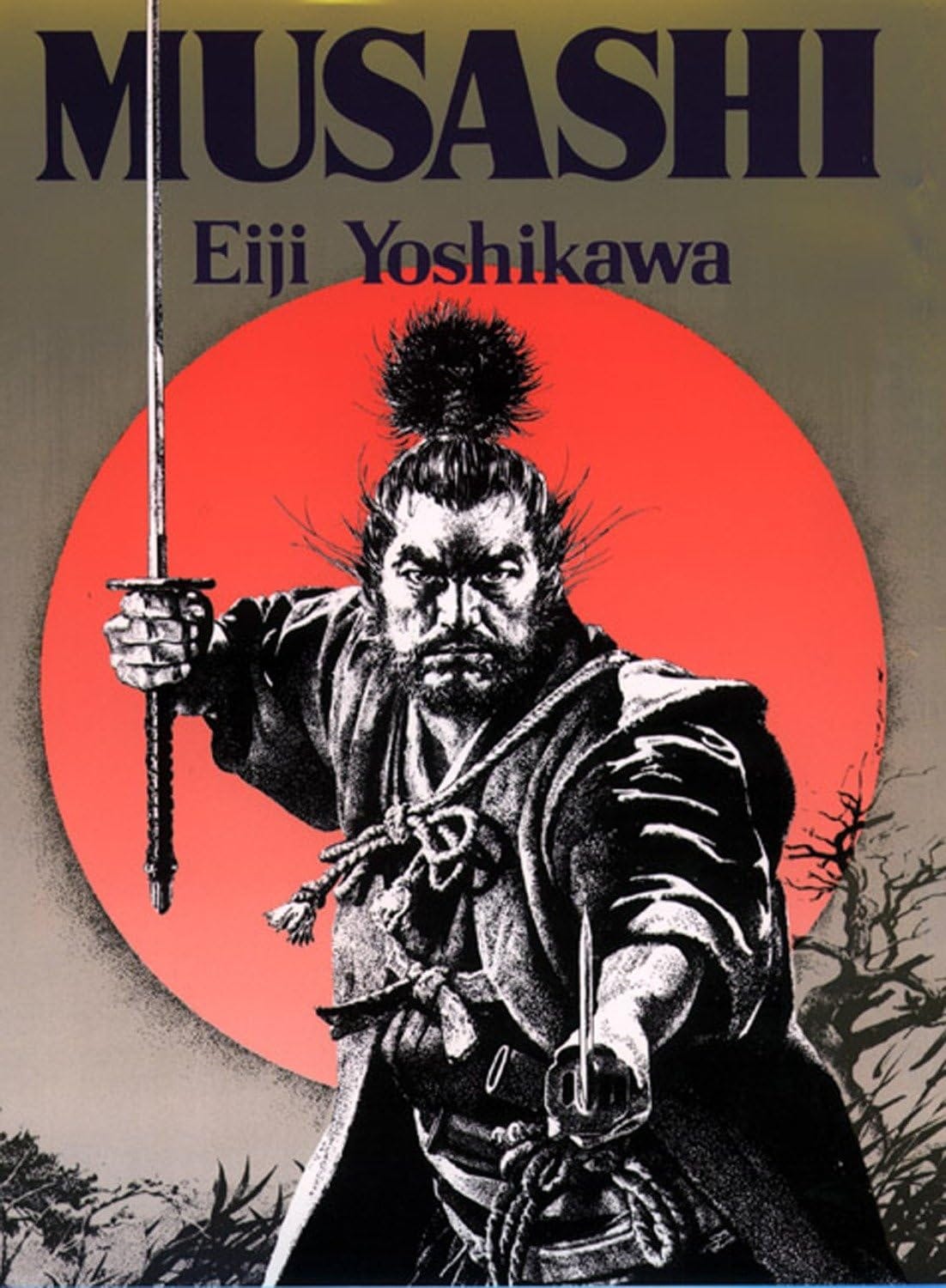
A link to Musashi (I receive a commission)